
What do parents tell their children?
“You didn’t come with an owner’s manual.”
Why not?
One manual for every child is impossible.
We learn only through direct personal experience.
Our responsibility is to write our owner’s manual.
An owner’s manual is similar to a diary in that it compiles events and experiences. It chronicles what works, what does not work, what has changed, what has not changed, what needs to change, the ways one has transformed, the ways one strives to grow and transform. Alex Howard, alexhoward.com, believes the only three absolutes a parent or caregiver needs to establish are boundaries (saying yes, saying no), safety (the co-regulation that allows the child to eventually self-regulate) and love (for who the child is, not for what the child does). Confronting with curiosity the good, bad, and ugly inside allows for the acceptance of a minimum of two sides to every coin. Be aware of the difference between concern and abuse, confidence and arrogance, interest versus control, and humility and martyrdom. Maturity is the ability to accept that the world does not exist to provide everything we need and want.
Every person is in this world for a reason. We must resolve in every endeavor to preserve the hope that something extraordinary may be just around the corner and, even when it’s not, that we have the capacity to learn what we need to confront in order to overcome and thrive.
There are positives and negatives in every decision we choose, but we have the power to determine what is essential in our quest to match our behavior to our vision.
“The past is a place of reference, not a place of residence. The past is a place of learning, not a place of living.” Roy T. Bennett
“Whatever prevents you from doing your work has become your work.” Albert Camus
VALUES
What are my principles?
What is my purpose?
What do I have to contribute?
What is my message?
With whom do I want to share it?
What legacy do I choose?
What are my triggers?
What is my default mode?
Do I want to re-wire my brain to improve my life?
BEGIN YOUR WELLNESS JOURNEY BY
WRITING DOWN YOUR HONEST ANSWERS TO THE FOLLOWING TWELVE QUESTIONS:
Do you love yourself? Do you take responsibility for yourself?
Do you use your breath to regulate your nervous system?
Do your senses inform you?
Do you choose food and beverages to maximize function and performance?
Do you move your body for flexibility, mobility, posture, and strength?
Do you identify your emotions and feel where they are most strong in your body?
Do you integrate brain health into your daily habits?
Do you pace your self?
Do you interact socially in a meaningful and productive way?
Do you establish and nurture healthy relationships?
Do you have a purpose?
Are you curious and are you willing to grow?
These questions are the basis of The Twelve Dimensions of The Wellness Inventory Wheel of John Travis, M.D. https://www.bodymindspirit.com/pages/12-dimensions-of-wellness-1, and originator of lifecoachtraining.com, formerly Wellness Inventory Certified Coaching Program
THE TWELVE DIMENSIONS
LOVING YOUR SELF AND TAKING RESPONSIBILITY FOR YOUR SELF
BREATHING
SENSING
EATING
MOVING
FEELING
THINKING
PLAYING AND WORKING
COMMUNICATING
CONNECTING
MEANING
TRANSCENDING
INTEGRATING THE TWELVE DIMENSIONS INTO YOUR LIFE

What is self-love? It is self-acceptance, self-compassion, self-kindness, self-nurture, and self-respect. What does it mean to take responsibility for your self? Non-negotiable ongoing accountability.
No one defines you but you.
Create your new story by aligning with your new beliefs.
Take small steps that you practice daily.
Post affirmations where you will see them throughout your day. Examples: My mind is a garden, my thoughts are the seeds, I can grow flowers or I can grow weeds. I am worthy of all to which I aspire. I trust myself to know the right path for me.
Write your own affirmations!
Own your voice and assert it when others ask and/or challenge your opinion.
BREATHING

What is our first action when we enter the world?
What is our last action when we leave the world?
Our breath.
It is the constant that accompanies us everywhere whatever we are doing and wherever we are going.
It is the rock to which we can affix our mindfulness practice.
It can energize us, relax us, sustain us.
It can reduce overwhelm.
When we are revved, we need to increase our exhalation.
TRY:
Inhale through your nose for a count of 3, inhale again through your nose for a count of 3, inhale again through your nose for a count of 3, hold for a count of 3, exhale for a count of 6 with an audible whoosh.
From the Association for Comprehensive Energy Psychology (ACEP): https://www.energypsych.org/blog/feeling-stuck-try-thisecd866fa
SENSING

From habitsofmindinstitute.org
Gathering Data Through Our Senses
By Bena Kallick and Arthur L. Costa
“Nothing reaches the intellect before making its appearance in the senses.”
Latin proverb
All external information gets into your brain through one of these sensory pathways:
- gustatory: the tastes you gather through your mouth.
- olfactory: the smells you inhale through your nose.
- tactile: the sensations you feel through your skin.
- kinesthetic: the positions you take through your movements and posture.
- auditory: the sounds you hear through your ears.
- visual: the sights you see through your eyes.
And it is not the single input of any one of these but the interplay within and between all of these systems that is how your brain functions. When one of these pathways is either blocked or compromised, the others are heightened so that you can make sense of the world.
Most linguistic, cultural, and physical learning comes from the environment by observing or taking in through the senses. An apple, for instance, must be eaten to know its crispness and sweetness. To know a role in a play, it must be acted; to know the game of soccer, it must be played; to know a dance it must be moved; to know a goal it must be envisioned. We deepen our knowledge as we experience more in the world. Some students go through school and life oblivious to the textures, rhythms, patterns sounds and colors around them. Sometimes we are afraid to touch, get our hands “dirty” or feel some object might be “slimy” or “icky.” When this happens, we are operating within a narrow range of sensory problem solving strategies wanting only to “describe it but not illustrate or act it,” or “listen but not participate, to look but not to touch.” Those whose sensory pathways are open, alert, and acute absorb more information from the environment than those whose pathways are withered, immune, and oblivious to sensory stimuli.
We gather data from internal sources as well. If you are in touch with your own emotions, you are also in touch with the physical sensations in your body. For example, you know that you are fearful because your heart rate begins to speed up, your stomach clenches, and your hair stands on end. You sense what other people are experiencing or feeling by sensations that arise in our own bodies. All of us are like walking antennae, receiving and registering the felt experience of those around us. Some of us are better at this than others. To accurately register this kind of information requires being in touch with our own emotional responses.
Both internal and external data gathering is a blend of automatic responses to stimuli and actions guided by our knowledge and expectations. As long as the sensory receptors (the eyes, the ears, the skin, etc.) are in good working order, they will automatically, unconsciously and simultaneously take in all the stimuli bombarding them at any given moment in time. However, we may not be consciously aware of all this information; much of it is determined to be irrelevant and is discarded. For example, some of the stimuli (such as the temperature in the environment or other peripheral data) are often encoded without conscious attention. It is only when the environmental conditions cause discomfort that we attune to what our senses are telling us.
Another aspect of brain function that helps us understand why multiple sensory input is important is that the brain does not store a memory in a specific location, rather it is stored all over the cortex in a sort of neural circuit; the sound in the auditory cortex, images in the visual cortex, etc. When you recall the memory, the brain reactivates or reconstructs the circuit in which it was stored. The more sensory modalities that were activated, the more triggers the brain has for reactivating the circuit. This suggests that concrete experiences you encounter that activate several of the senses can enhance your recall of the information at a later time.
Learning about the ways that your brain gathers and stores information can help as you are learning. Many people find attending to the arts and music improves their mental functioning. Forming mental images is important in mathematics and engineering; listening to classical music seems to improve spatial reasoning. Social scientists solve problems through scenarios and role-playing; scientists build models; engineers use cadcam; mechanics learn through hands-on experimentation; artists experiment with colors and textures. Musicians experiment by producing combinations of instrumental and vocal music. A skilled chef experiments with combinations of flavors and textures of various foods.
EATING AND DRINKING


Rupy Aujla, M.D., the doctorskitchen.com
betternutrition.com
Dr. Dale Bredesen apollohealthco.com for Alzheimer’s Disease prevention
detoxproject.org
Food Synergy: From worldcouncilforhealth.org: Food synergy is the collaboration of nutrients to work together to increase health benefits. Examples: black beans (for iron) and red peppers (for Vitamin C), blueberries and walnuts, turmeric (that we do not absorb well) and black pepper (that has a chemical, piperine, that allows absorption). From betternutrition.com, avocado, egg, kale; chickpeas and rice; salmon and sweet potato; yogurt (for Vitamin D) and pumpkin (for magnesium).
From Gary Kaplan, D.O., DABFP, DABPM, FAAMA, https://kaplanclinic.com/provider/gary-kaplan-d-o/https://kaplanclinic.com/ bananas (for plant-based carbohydrate, inulin) and Greek yogurt (for healthy bacteria); dark chocolate and apples; garbanzo beans, red bell peppers, spinach. PREBIOTIC FOODS: asparagus, bananas, dandelion greens, eggplant, endive, garlic, honey, Jerusalem artichokes, jicama, kefir, leeks, legumes, onions, peas, radicchio, yogurt. PROBIOTIC FOODS: acidophilus milk, buttermilk, cottage cheese, kefir, sauerkraut, sour cream, yogurt
Incorporate more foods rich in B-vitamins (B12, B6, Folate). B-vitamins are involved in a number of important processes in the brain: they support cellular energy production, proper functioning of the nervous system, red blood cell formation, DNA formation, and the regulation of hormones. Studies show that deficiencies in certain B vitamins can result in an increased risk of depression.
Foods rich in B vitamins include beans, lentils, raw spinach, asparagus, romaine lettuce, broccoli, avocado, fish, shellfish & eggs.
Eat foods that provide gut support. One of the many neurotransmitters used by the brain is serotonin. Among its many functions, serotonin is involved in regulating mood. We now know that as much as 95% of serotonin is produced in the intestines so maintaining the integrity of your gut microbiome with a proper balance of good and bad bacteria will help keep the production of serotonin in balance as well.
Eat high protein foods at every meal to support neurotransmitter production. Your body produces neurotransmitters by utilizing nutrients in the food you eat, primarily amino acids. For example, serotonin is a byproduct of the amino acid tryptophan; noradrenaline is made from the amino acid tyrosine, which is also converted to dopamine. Serotonin, noradrenaline (aka norepinephrine) and dopamine belong to a group of neurotransmitters called monoamines that play a major role in mood & cognitive function.High protein foods like raw nuts, cold water fish, beans, and eggs, consumed on a regular basis, will ensure that your body is getting enough of the building blocks it needs to produce these important chemical
Regularly eating foods like fermented vegetables, sauerkraut, miso, and bone broth will keep your gut microbiome stocked with good bacteria.
When snacking, always balance carbs with fats and protein. Keeping your carbohydrate and protein intake in balance will help stabilize mood and mental clarity and while avoiding the peaks and valleys of blood sugar levels that can also lead to other serious conditions like insulin resistance and pre-diabetes.
What does a complete protein and carb combination look like? Try combinations like: hummus with celery, bell peppers and/or carrots; apple, pear, or banana with almond butter (or any nut butter); sunflower seeds and raisins.
Saffron and turmeric may support people with anxiety & depression. Foods with turmeric and saffron have for ages been eaten for medicinal support. A study published in Journal of Affective Disorders, reported that a treatment of curcumin (the active ingredient in turmeric) and saffron were effective at easing anxiety and depressive symptoms in people with major depressive disorder.
The anti-inflammatory and antioxidant properties in turmeric and saffron help calm inflammation. Add them to your foods for flavor and anti-inflammatory benefits.
Michael Greger, M.D., NutritionFacts.org
From “National Geographic Nature’s Best Remedies” Top Medicinal Herbs, Spices, and Foods for Health and Well-Being by Nancy J. Hajeski with Foreword by Tieraona Low Dog, M.D.: Herbs: Eat basil for digestion. Respiratory Remedies: Elderberry (Sambucus nigra/Black elderberry); One crushed clove of garlic, juice of a lemon, and one teaspoon honey in warm water three times a day; Six to eight tablespoons of grated ginger, a pinch of cinnamon, a squirt of lemon juice, and one teaspoon honey steeped in water for forty minute, strained, and chilled up to one day. Skin Care: Cleanser: Massage plain yogurt onto face. Leave three minutes. Rinse. Toner: Mix one part organic apple cider vinegar and two parts water. Apply to face with a cotton pad. Spices: Sore throat gargle: one-half teaspoon ground cardamon and one-half teaspoon cinnamon in eight ounces water that is boiled and cooled.
Jamie Koufman, M.D., jamiekoufman.com, was the first person to link “reflux,” “diet,” and “cure.” Her book, “Dropping Acid: The Reflux Diet Cookbook & Cure” summarizes twenty-five years of clinical and scientific research and discoveries. She explains how LPR (laryngopharyngeal reflux) is different from GERD (gastroesophageal reflux disease), provides list of reflux trigger foods and food allergies, and reveals why a low-acid diet is important in the induction (detox) phase of treatment to make it possible to stop harmful medications like Nexium and Prilosec. There are natural reflux remedies and seventy-five original, delicious, and reflux-friendly recipes. Dr. Koufman writes: The best beverage choices are water (preferably alkaline, pH 9.0-9.5), tea (not mint), low-fat milk; almond, rice, and soy milk. Avoid virtually everything in a bottle or can except still water. All bottled and canned beverages are acidified by law to limit the growth of microorganisms. I am a big fan of the Cerra Water pitcher; I fill it every night and drink at least a pitcher’s worth of pH 9.5 Cerra water every day. The best fruit juice choices are freshly juiced aloe vera, banana, beet, carrot, cucumber, kale, pear, spinach, and watermelon. For the everyday refluxer, I recommend that you purchase pH paper to test things. If you are a serious refluxer, avoid everything pH 5.0. Actually, you can test about anything you consume; just wet the item and hold the pH paper in contact. All green veggies are fine, for example, all about pH 7.0.”
MOVING

https://www.innervativetherapies.com/post/why-movement-is-so-important
Stretch as soon as you wake, throughout the day, and at bedtime to feel where you are tight so you can move to unravel it.
Dance to your favorite music!
Our body fluids stagnate, lymph pools, and blood flow slows when we are in one position for a period of time, so shake throughout the day.
Roll your shoulders and loosen your neck regularly to prevent tension.
Adrenaline, dopamine, and serotonin boost our energy better than caffeine or sugar, so bounce, gallop, jump, and skip throughout the day.
Dip, kick, squat, and wall sit to build and maintain muscle.
From the University of Sydney: VILPA (Vigorous Intermittent Lifestyle Physical Activity) refers to periods of one to two minutes of vigorous physical activity within everyday tasks such as climbing stairs, heel raises, one-leg balances, side bends, and walking carrying shopping bags.
Dr. Kenneth Cooper, https://www.cooperinstitute.org/, 93 years of age, introduced aerobics in the sixties. He founded Cooper Aerobics Center in Dallas, Texas, in 1970. There are six health and wellness companies including a clinic and The Cooper Institute, a non-profit research and education center. “Cooperizing” is BMI (Body Mass Index) between 18 and 25, thirty minutes of exercise most days of the week, healthy food choices, no tobacco, control of alcohol, control of stress, regular physical exams, and take the right supplements for you. What Dr. Cooper does currently: exercise five days a week, forty-five minutes on recumbent bike, ten minutes of circuit weight training on three or four machines, walk dogs fifteen minutes/one and one-half miles at a time. He advises that “fitness is a journey, not a destination.”
Ann Louise Gittelman, Ph.D., CNS, in her book, “Radical Longevity,” in 2021, wrote that lymph is liquid fascia and collagen is solid fascia. The cells that make fascia collagen are called fibroblasts. When fascia is dehydrated or pushed beyond its limits, fibroblasts stimulate inflammation as a protective mechanism. When inflammation persists, fibroblasts can no longer clean, repair, and replace damaged fascia. This is when the trauma leads to the formation of adhesions. This straight-jacket post-injury does not show on CT scans, MRIs, ultrasounds, or x-rays. Bloating and abdominal pain can be internal adhesions. Also, scars that are fixed and immobile are also sure to have adhesions beneath the skin. To free fascia, stretch, do low-impact exercise, walk for thirty minutes at a time, bounce lightly on a rebounder or trampoline for five minutes at a time, and walk on the balls of one’s feet.
Thomas Hanna, essentialsomatics.com, “In 1975, Hanna founded the Novato Institute of Somatic Research. He coined the term “somatics” in 1976 in hopes that it would define the field of movement awareness (including Alexander Technique and Feldenkrais, in addition to CSE). At Novato, with the experience he gained from Feldenkrais in movement education, Hanna saw hundreds, if not thousands of people with “mysterious” pain symptoms who had seen many doctors without relief. Hanna was able to relieve and eliminate pain quickly by addressing what he named sensory motor amnesia, and replace it with sensory motor awareness. Throughout the 1980s, Hanna continued his research in Somatic education, calling himself a “philosopher who works with his hands” and helping many people overcome what was thought by the medical community to be hopeless cases.”
nianow.com Debbie Rosas, founder of NIA, has taught since 1983 to mobilize our 13 major joints to wake up our whole body. Start with your left ankle and then move to your left knee, left hip, left wrist, left elbow, left shoulder, entire spine, right shoulder, right elbow, right wrist, right hip, right knee, and right ankle. Notice if any joints feel stiff or achy and give them a little extra love and attention today.
Sadie Nardini, sadienardini.com
Martha Peterson, essentialsomatics.com
Sarah Warren, CCSE, RSME, somaticmovementcenter.com
Warriors At Ease, warriorsatease.org
SOME IMPORTANT TERMS
abduction is movement away from the core (jumping jacks, lifting arm or leg to dress).
adduction is movement toward the core (arms at sides after waving, standing with legs together).
extension is straightening (increases the angle between bones).
flexion is bending (decreases the angle between bones).
dorsiflexion is upward.
plantar flexion is downward ankle movement.
positions:
prone or prostate is flat on one’s front with face down.
supine is flat on one’s back with face up.
rotation and rolls:
eversion is outward.
inversion is the inward roll of the sole of the foot.
lateral rotation is away from the core.
medial rotation is toward the core.
pronation is inward.
supination is outward.
Knees and elbows are hinge joints (open and close in one direction).
Shoulders are ball-and-socket joints (move in many directions).
Static Stretch is stretching a muscle as much as possible and holding the position for 15-20 seconds.
There are three types of range-of-motion exercise:
active: person performs without assist
active assistive: therapist helps
passive: therapist does it to/for you.
FEELING
Daniel Goleman, danielgoleman.info, psychologist, author, and science journalist, in “Optimal,” written with Cary Cherniss, explains emotional intelligence. It means a good mood at work, engagement in the task, high performance, satisfaction with work. He lists the four elements: self-awareness, self-management, social awareness, and relationship management.
The twelve phrases emotionally intelligent people tend to say regularly are:
I can handle this (self-management, self-control) means I have the ability to keep disruptive emotions like anger or anxiety from interfering with what has to be done and, if I do get upset, I recover quickly.
I can get better and so can you (self-management, positive outlook) means I realize everyone needs guidance and practice, I roll with the punches, and I see opportunities in setbacks.
I’m excited about this change (self-management) means I am able to navigate uncertainty, am adaptable versus rigid in my responses, and am eager to learn new ways.
This is what really matters (self-management, achievement orientation) means I keep my eye on the big-picture goal despite distractions of the day to help promote achievement.
I have these thoughts because… (self-awareness) means I know my triggers and the feelings they generate.
I get it and I care about you (social awareness, empathy) means I acknowledge the need for closeness and trust in relationships. There are three kinds of empathy: knowing how someone thinks about what is happening, sensing someone’s feelings, and having concern for someone.
So that’s how things work around here (social awareness, organizational awareness) means I know who makes the decisions which offers a key to the crucial dynamics of an organization. If I understand who is involved and how things work, I am often able to have influence.
What if you try doing it this way? (relationship management, influence) means I know how to convince someone to see things my way by suggesting how a person might do something better.
That means so much because… (relationship management, inspirational leadership) means I accept that outstanding leaders derive the best efforts out of others from a heart-to-heart purpose that resonates.
We can work this out (relationship management, conflict management) means I don’t ignore the talent of handling conflict. I listen to all perspectives and come up with win-win solutions.
We have each other’s backs (relationship management, teamwork) means there is a sense of psychological safety on our team. It allows every team member to take risks to be innovative without fear of being criticized or ostracized. The process is collaboration wherein both responsibilities and rewards are shared.
This could help you (relationship management, coaching and mentoring) means coaching or mentoring in the form of feedback, the offer of support, and motivation to learn and grow. It is the foundation of the development of future leaders.
Candace Pert, Ph.D., neuroscientist and pharmacologist, discovered the opioid receptor. In 1997, in “Molecules of Emotion,” she stated that unless we can measure something, science won’t concede it exists which is why it refuses to deal with such “non things” as the emotions, the mind, the soul, or the spirit. She wrote, “I’ve come to believe that virtually all illness, if not psychosomatic in foundation has a definite psychosomatic component (oneness of the human psyche/mind and spirit, and the soma/body).” She coined the term, bodymind. The official website, candacepert.com, dedicated to her work and legacy takes care to note that this expression was “intentionally written without a hyphen in order to emphasize unity of its component parts.”
Esther M. Sternberg, M.D., esthersternberg.com, rheumatologist, former National Institute of Health colleague of Candace Pert, Ph.D., expanded on her work writing “The Balance Within, The Science Connecting Health and Emotions, in 2001. She asks, “What happened to our modern world where isolation has replaced social support, where technology has broken the bond between doctor and patient in healing, where the role of emotions in health and disease has too often been cast aside?” She provides an extensive history of medicine including Copernicus who claimed the earth resolves around the sun and Descartes whose focus was the separation of brain and body, sixteenth-century anatomists who dissected bodies and concluded only what we see is real, twentieth-century physicists who believed only what is measured is real, critics of James Lister and Louis Pasteur who dismissed them as unimportant in modern medicine. She writes of the need for integration of neuroscience, immunology, endocrinology, psychiatry, rheumatology with sophisticated technological tools that prove mind/body oneness. (It has arrived in the present field of psychoneuroimmunoendocrinology!). She is now at the Arizona Center for Integrative Medicine, College of Medicine, and College of Architecture, Planning, and Landscape Architecture. In her 2023 book, “Creating Wellbeing in any Workspace,” she states the seven core areas that are necessary for good medicine and whole-body health. They are the decrease of stress and the increase of resilience, movement, enough quality sleep, social connection, a toxin-free environment comprised of clean fresh air and nature, a healthy diet, and spiritual reflection. Her personal goals are to take all the healing space principles, continue to research, train future design and health professionals, work with practitioners to apply the methods, change policy from outside the federal government after leaving the National Institutes of Health where she worked for over twenty years, and broaden her concept of health and mind-body interactions. She cites her colleague, University of Arizona anesthesiologist, Mohab Ibraham, whose brother, Wael, relieved his migraines when he sat among the trees in the park. Consequently, a lab study found that rats who looked at green lights one to two hours a day for ten weeks had less pain of all kinds than the rats who looked at white lights one to two hours a day for ten weeks. https://www.sciencedaily.com/releases/2020/09/200910090016.htm
Ann Louise Gittelman, Ph.D., CNS, in her 2021 book, “Radical Longevity,” describes that both emotional suffering and physical pain, physiologically perceived as threats, activate the sympathetic nervous system fight or flight response. When emotions stay suppressed and tensions run high, we shift into sympathetic dominance, whereby cortisol levels rise and normal hormone balance is disrupted. This explains, for instance, how one develops belly fat as a result of chronic pain. She notes that Candace Pert, Ph.D. more than twenty years ago, discovered that every cell in the body is capable of experiencing pleasure, pain, emotions, and memory. Grief, for example, when suppressed, is stored in the body and changes everything from the mitochondrial energy production to the cell’s ability to receive nutrients. The result is fatigue and pain that are both physical and emotional. This leads to shortened telomeres and DNA damage. It is, therefore, very important to know how one’s body reacts to emotions. Start to notice how your body feels when unpleasant emotions arise. She advises that whether you choose to discuss them with a trusted friend or therapist, journal them, meditate on them, or work them out through yoga or other practices, it is vital to release stored emotions in the moment and avoid build-up in the future.
Donna Jackson Nakasawa, donnajacksonnakasawa.com, explains that the job of the brain is protection. All neural synapses during childhood develop in response to safety. While over two-thirds of children experience ACEs (Adverse Childhood Experience), heightened levels of cytokines (inflammation) ensue. If trauma is appropriately managed, the child can regulate and feel safe. If, however, there is chronic unpredictable stress, the body has no opportunity to recover. Donna offers two online courses: “Your Healing Narrative” (one for professionals and one for anyone over the age of eighteen). “A Write-to-Heal with neural re-narrating. How history of adversity affects relationships and health. Take-home strategies to recognize and override the brain’s old thought patterns and stories to enhance inner resiliency, calm body brain mind, and flourish.”
Emotions impact us before our conscious mind is aware.
Avoiding them never helps.
Be as compassionate with your self as you are with a good friend.
In the moment, stop, name the feeling, and where in your body you feel it.
Blurry vision, dizziness, ear ringing, intrusive thoughts: cognition.
Constipation, diarrhea, urinary frequency: smooth muscles.
Chest pressure, chest tightness, impossible to take a deep breath: strident muscles.
Listen to what your body is communicating to you.
THINKING

ON WHAT DO YOU FOCUS YOUR MIND?
From Sarah Nykoruk, sarahnykoruk.com, every cell in the body reacts to every thought.
The brain’s job is to categorize, compare, explain, judge, predict, protect, and worry for one sole reason, survival.
MULTIPLE INTELLIGENCES
Howard Gardner’s Theory of Multiple Intelligences identified seven: visual (spatial), aural (auditory-musical), verbal (linguistic), physical (kinesthetic), logical (mathematical), social (interpersonal), solitary (intrapersonal). https://www.washingtonpost.com/news/answer-sheet/wp/2013/10/16/howard-gardner-multiple-intelligences-are-not-learning-styles/
ANTS (AUTOMATIC NEGATIVE THOUGHTS)
Daniel Amen, M.D. , danielamenmd.com, prefers the term, brain health, to the term, mental illness, danielamenmd.com/podcasts/how-automatic-negative-thoughts-ants-react-in-the-brain. ANTS are the results of beliefs about one’s self and the world. He identifies nine types of thoughts: all or nothing thinking (all good or all bad), always thinking (whatever has happened will always happen), focusing on the negative (ignoring the good), fortune-telling (predicting the worst possible outcome and going into a depression spiral), mind-reading (when you think you know what negative thought someone is having), thinking with your feelings (believing negatives without questioning them), guilt beatings (the should, must, ought, have to), labeling (prevents a reasonable way to behave), and blaming (assigning poisonous accusations).
The website has a Brain Health Assessment. The questions address ability to organize, tendency to being easily distracted, attention span, ability to wait patiently in line, tendency to lose thought in the middle of talking, ability to delay gratification, struggling with memory, a memory that is worse than it was ten years ago, ability to remember names, the ability to exercise regularly, ability to sleep 7-8 hours a day, inability to avoid a poor and haphazard diet, drinking more than sixteen ounces of coffee a day, drinking soda daily, drinking four or more alcoholic drinks a week, smoking, watching more than one hour of television daily, inability to fall asleep, inability to stay asleep, stress, having healthy and satisfying relationships, interest in new activities, tendency to see life as more up than down, tendency toward argumentative/oppositional behavior, tendency to experience thoughts that run on a loop, tendency to feel sad/blue, tendency to worry, inability to release past hurts, tendency to have a negative mind, high self-esteem or low self-esteem, tendency to have trouble experiencing joy, tendency to take things wrong, ability to relax, tendency to predict the worst, tendency toward sensitivity to criticism, biting nails or picking skin, tendency to feel tense/nervous, energy level, the tendency to have cravings.
DEFEAT NEGATIVE SELF-TALK
Judy Ho, Ph.D., ABPP, ABPdN, drjudyho.com, licensed clinical and forensic neuropsychologist, Pepperdine University neurologist, in “The New Rules of Attachment,” states that identifying the trigger is the first step. Next is questioning the truthfulness of thoughts by asking what supports this thought and what contradicts this thought. Third is practicing a more balanced pattern. Example: I did not do everything on my list today, but I did complete the first five items. Fourth is concentrating on the present and creating distance from the past (a memory) and/or the future (a possibility). Example: I am having the thought that I will continue to have a bad day as a result of a mistake I made this morning and/or a mistake I will make this afternoon, but this does not mean the thought is true. Criticize the thought, not your self.
ATTENTION MANAGEMENT
Maggie Seaver, in the June 18, 2020, article in Real Simple magazine wrote that attention management, not time management, is the better path to productivity.
Maura Thomas, author of “Attention Management: How to Create Success and Gain Productivity Every Day,” writes that time management does not work because we cannot control time. We can allocate ninety minutes to complete a certain task, but ninety minutes, for a variety of reasons, may be inadequate. Instead, she writes that attention management, the collection of behaviors that provides the opportunity to shift to a more relevant brain state, is more effective. The brain states or four quadrants of attention that we occupy and move between are reactive and distracted, focused and mindful, daydreaming and mind wandering, and flow. Reactive and distracted is where we spend most of our day as we try to focus but lack control over surroundings and are at the mercy of distractions. Focused and mindful is the opposite of reactive and distracted where we make the effort to take steps to counter interruptions and focus on cognitive tasks. Daydreaming and mind wandering is where we are able to balance ourselves, relax, draw insight, brainstorm, and discover our creativity. Flow is the effortless loss of one’s self in a task that Mihaly Csikszentmihalyi, Ph.D., psychologist, https://www.cgu.edu/people/mihaly-csikszentmihalyi/ recognized and named. Maura Thomas recommends controlling one’s environment and controlling one’s technology. Environment: communicating verbally that you are taking twenty minutes or so every hour or a total of ninety minutes twice a day and posting a do not disturb me sign. Technology: instead of the constant intrusion of your device, use classical music or ocean waves or crackling fire or whatever sounds comfort you.
HABIT STACKING
Maggie Seaver, in the February 1, 2022, article in Real Simple magazine, explains a simple and effective technique to change an existing habit or introduce a new one. It means adding a new behavior onto a current behavior in order to remember to do it and/or perform it with less mental effort. She notes “S.J. Scott used the term in his book, “Habit Stacking: 97 Small Life Changes that Take Five Minutes or Less.; BJ Fogg, Ph.D., behavior scientist and Stanford University Behavior Design Lab founder and director, author of “Tiny Habits: The Small Changes That Change Everything,” and creator of the Tiny Habits Method describes the current habit as the anchor or anchor moment that helps cue and hold the new one in place; and James Clear, habits and behavior expert, author of “Atomic Habits” and creator of the Habit Journal.
NEUROPLASTICITY
New thoughts create new pathways.
Repetition and practice form new habits.
Old pathways weaken and, with direct attention to change, we rewire our brains.
William James, psychologist, wrote in 1890 in “The Principles of Psychology” that “organic matter, especially nervous tissue, seems endowed with a very extraordinary degree of plasticity.”
Caroline Leaf, Ph.D., drleaf.com, in “HOW TO HELP YOUR CHILD Clean Up Their Mental Mess, A Guide to Building Resilience and Managing Mental Health,” writes “We don’t have a mental health crisis. We have a mind-management crisis.” She explains that children can become overwhelmed because they don’t have the mental skills to understand what is happening or to communicate what they experience. However, by learning how to self-regulate, they can observe themselves and monitor their interactions. She notes that the mind’s, brain’s, and body’s signals (emotions, behaviors, bodily sensations, perspectives) are key. Her method, Neurocycle has been proven in children and adults to discontinue a negative pattern and solidify a new healthy habit in 63 days.
PLAYING AND WORKING
When we alternate activity and rest, we allow our selves to practice pacing.
QUESTIONS TO ANSWER WITH THE FOLLOWING WORDS:
RARELY, OCCASIONALLY, FREQUENTLY, ALMOST ALWAYS
Are you able to cope with your assignments?
Are you taking a stop-and-pause time for your self throughout the day?
Are you overwhelmed mentally?
Are you exhausted physically?
Are you so drained that it is too difficult to maintain your equilibrium?
Are you pleased with your position and its duties?
Are you spending time enjoying favorite activities?
Are you able to unwind?
Are you feeling a need to escape?
Are you able to focus?
Are you triggered at work?
Are you sleeping well?
Are you experiencing headaches, indigestion, tension?
Saundra Dalton-Smith, M.D., drdaltonsmith.com, internal medicine physician, and founder of Restorasis, is the author of “The Sacred Rest, Set Free to Live Free.” She developed the restquiz.com to evaluate how lifestyle affects health. There are 7 types of rest: physical, mental/fibro fog, sensory, creative, emotional support, social, and spiritual. For physical: active in the form of foam rollers, massage, stretching, walking, and passive in the form of sleep. For mental/fibro fog: in the evening, a brain dump and a “to do list” for the next day as they safely record your thoughts to release and digest at another time. For sensory: establishing time for peace and quiet to nurture yourself starting with fifteen minutes a day, changing the language from “I can’t” to “I can” using small steps. For creative: play that allows you to lose yourself and appreciate beauty. For emotional support: ask yourself if you have someone with whom you feel safe and able to share your authentic self? She explains we cannot always be transparent, for example, at work we need to maintain our professionalism. It is still essential, however, to unmask rather than “Yeah, I’m fine. All good.” which are emotional burdens that can lead to anxiety and depression. If you have no one, journal what you need to release. For social: When people demand your time and energy, know who needs absolutely nothing from you, appreciate you, and around whom you are calm and happy. Relationships need to be life-affirming and life-giving. It may not be your family. Be aware of help versus harm. Are people too dependent on you? Who drains you? Developing a positive mindset is essential. For spiritual: faith, causes, organizations. We need to know we belong, have purpose and meaning, and are part of humanity.
COMMUNICATING
Knowing one’s self is essential for one’s well-being and for interactions with others.
How well do you know your self?
How well do you know others?
Some questions to ask your self and to ask others:
What is your happiest childhood memory?
What is your most cherished souvenir?
Do you think you are self-confident?
What is something you want but don’t need?
What one thing must you do every day?
What do you value the most in a relationship?
What’s your favorite article of clothing? band? beverage? cake? candy? color? day? food? ice cream flavor? meal? month? movie? painting? photo of your self? season? smell? snack? sound? time of the day? word?
What is your definition of beauty?
What bothers others but doesn’t bother you?
What always makes you laugh?
Who’s the first person you would thank when giving a speech in recognition of you?
What item is always in your grocery cart?
How do you relieve stress?
Can you read a map?
What would you outlaw?
Do you prefer a ferris wheel or a rollercoaster?
How would you describe your self in three words?
Do you have a motto to live by? What is it?
What surprises people about you?
Are your first impressions accurate?
What do you think you would never buy even though you could afford it?
Is charisma a quality or a skill?
Is ignorance bliss?
Is there anything that can only be done one way?
Do you prefer city or country?
Has anyone ever shattered your dreams?
What three activities would make a perfect day?
In all interactions, there may be impasse.
Choosing to take a short walk can alleviate tension.
Upon return, each individual can gently assert: ”I am right, you are right; I am wrong, you are wrong” for the purpose of asking “where do we decide to go from here?” Do we have something to salvage? How do we see our relationship? Is it flourishing and nourishing or is it debilitating and withering?
Whatever the outcome, there will hopefully be a heartfelt interest to improve.
If not, allow it to be as it is.
Unwillingness to communicate, participate, and share is a message in itself.
We can lead a thirsty horse to water and yet break his neck in the process.
Banter is joy. Chaos is joyless.
THE KARPMAN DRAMA TRIANGLE
Stephen B. Karpman, M.D., karpmandramatriangle.com, identifies three characters:
The Victim who needs to be blameless and wants love.
The Persecutor who needs to be right and blames the victim for everything.
The Rescuer who enables the victim.
TED (THE EMPOWERMENT TRIANGLE)
Stephen Karpman sees The Empowerment Triangle as a highly original and effective escape from The Drama Triangle.
TED (The Empowerment Dynamic), the empowermentdynamic.com, uses self-awareness as the key to transform.
The Victim becomes the Creator who accepts vulnerability, adapts an “I can!” mindset, and solves problems.
The Persecutor becomes the Challenger who encourages a “You can!” grow-and-learn mindset in an assertive and constructive way.
The Rescuer becomes the Coach who listens and provides support by asking “How can I help” instead of commandeering the situation.
WHEN YOU ARE INCLINED TO RESCUE (ADVISE, FIX, HELP), STOP AND ASK YOUR SELF:
Is this person’s safety and/or welfare at risk?
Does this violate my boundaries?
Do I feel superior to the person?
Am I trying to control an outcome?
Has this person asked me to assist?
Am I considering how the person would like to receive my intervention?
Is this a repeat situation? If yes, how many times?
Does this person have resources?
Do I know how this person came to be in this situation?
Am I stealing the person’s lesson-learned experience?

CONNECTING
ATTACHMENT STYLES
https://www.verywellmind.com/attachment-styles-2795344
Our childhood sets our emotional and physical role in the world as a result of the attachment (bonding) we experienced, experienced intermittently, or did not experience at all.
The attachment styles are secure, anxious, avoidant, and disorganized. They can overlap. They impact nervous system regulation.
Secure is balance and harmony with people and without people. A person feels satisfied and stable. Expressing emotions, giving love, and receiving love are easy.
Anxious is a need for reassurance and, when away from people, there is an unsafe feeling and a tendency to overthink. Due to either too much attention or too little attention in childhood, there is insecurity, jealousy, a need to please to gain external fulfillment, and a struggle to be assertive on one’s own behalf as one tries to think one’s self to safety. An anxious person needs self-actualization and self-empowerment.
Avoidance is the opposite of anxious in that being close to people is difficult, overwhelming, and a trigger, and consequently, an inability to commit. Due to parents and/or caregivers who were avoidant, non-empathic, unattuned, and/or unskilled, avoidance feels like being trapped in a relationship that can lead to detachment and self-sabotage. This learned distancing of I am fine by my self and I don’t need others can be resolved by learning to feel safe in connection.
In unhealthy situations, it is possible for anyone to experience circumstantial avoidance.
Disorganized is oscillating between anxious and avoidance, feeling uncomfortable when too close, so move away, and then feel uncomfortable when away. The reasons are inconsistent parents and/or caregivers, an absence of boundaries, an unpredictable environment, and/or significant trauma. Due to off/on Jekyll and Hyde experiences, there is chaos and overstimulation. They feel judged and misunderstood, have very complex relationships, and self-medicate. There can be numerous relationships on an ongoing basis.
Dr. Gordon Neufeld https://neufeldinstitute.org/ about-us/dr-gordon-neufeld/ https://neufeldinstitute.org/about-us/our-approach/
Robert J. Wicks, PsyD, robertjwicks.com, writes in “Bounce, Living the Resilient Life,” “In my personal and professional work, I have found a rich circle of friends consists, at the very least, of four ‘types’ or ‘voices.’ One friend may play more than one beneficial role at different points in our lives.
The four types are prophet, cheerleader, harasser, and guide.”
Prophet’s voice is quiet, fleeting, strong. Prophet lives honestly and courageously helping us to maintain balance and openness. Is compassionate. Prophet does not product conflict but often has a message of truth of discomfort or pain. A prophet in our lives is difficult because no matter how positive we may believe the ultimate consequences may be, we may shy away and agree with Henry David Thoreau “If you see someone coming to do you a good deed, run for your life!” This, however, would perhaps divert us from opportunities of real value and real life because prophets challenge us to observe how we live in order to ask ourselves “To what voices do I listen when I form my attitudes and take my actions each day?” “We bring to the surface where it can be seen the hidden tension that is already alive. Like a boil that can never be cured as long as it is covered up, it must be opened with all its ugliness to the natural medicines of air and light.” Martin Luther King, Jr. ”Let our first act every morning be this resolve: I shall not fear anyone on earth…I shall not bear ill-will toward anyone. I shall conquer untruth by truth and in resisting untruth, I shall put up with all suffering.” Gandhi Prophet enhances our non-negotiable single-mindedness.
Cheerleader’s voice is unabashed and enthusiastic. Contrary to the notion that cheerleader encourages denial and/or narcissism, cheerleader’s love is necessary because we cannot survive alone. Burnout is always a possibility when no one acknowledges our gifts and issues threaten us. Cheerleader showers us with support.
Harasser’s voice is teasing. Laughter at situations and self. Knowing that people do not necessarily follow our guidance or even appreciate us requires that we maintain perspective so as to avoid wasting our energy. Harasser shows us another view of life.
Guide listens. Guide does not accept “the manifest concept” (what we say and do) as being equal to “the total content” (our actual intentions plus our statements and actions). Guide searches for nuances in what we share so they can help us to uncover what causes anxiety, fear, hesitation, stubbornness.
What do you value in a friend?
List the friends in your life.
Can you be yourself with your friends?
ACTIVITY:
Identify people who have passed who have impacted your life. How?
Identify people who currently impact your life. How?
Identify friends who are your heroes.
Identify your prophet(s). Explain.
Identify your cheerleader(s). Explain.
Identify your harasser(s). Explain.
Identify your guide(s). Explain.
How do you identify yourself? Why?
What do you want to change and/or improve?
MEANING
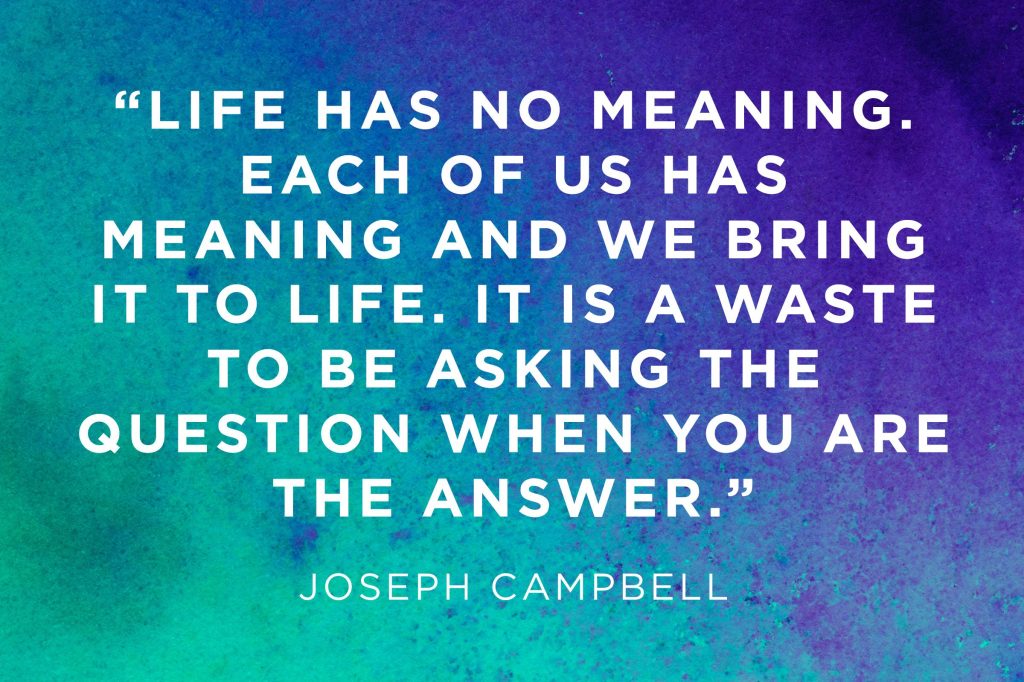
From VIA Institute, viacharacter.org, “When we search for happiness, we focus on acquiring things (a promotion, a new car, etc.) which provide only temporary emotional benefits. This puts us on what social scientists refer to as the hedonic treadmill — because searching for our next thrill can feel like running on a treadmill.
Meaning is different. When we search for meaning, we choose experiences that deepen our connection to others and to the world around us creating a transcendent experience that elevates us from material pursuits.
Three dimensions of meaning are coherence, purpose, and significance.
Coherence is the effort we put into making sense of our own lives and the world around us. When events that disrupt coherence occur — things like famine, war, and suffering, we no longer feel that the world makes sense. But when our environment makes sense to us, we experience an uplifting sense of meaning.
Purpose reflects our orientation toward the future — our belief that we have goals that give our life direction. Viktor Frankl, author of ‘Man’s Search for Meaning,’ described purpose as something people think about in terms of their lifespan rather than merely a day. While we can have more than one purpose, each purpose has an enduring connection to our identity.
Significance solves another human need which is our desire to feel valued and worthy. This dimension of meaning elevates our self-worth so that the way we think of our life cannot be reduced to something transient like happiness. Believing that our life is important creates a lasting foundation of self-worth.”
Kelly McGonigal, author, psychologist, educator, Stanford University, kellymcgonigal.com., in “Why Joy Matters and How to Choose It Every Day,” writes, “What is joy? A feeling that delivers a message of belonging and meaning.” ”Choose a memory that brings you joy or a real-time moment of joy. What value does it highlight?” ”Make time for joy. Notice how you resist, postpone, or dismiss joy: I don’t have time. I’m too stressed/tired/angry/sad. It won’t make a difference. Connect to a song you loved when you were young, that inspires you to dance, that moves you by its artistry/beauty/power, that reminds you of someone you love.”
TRANSCENDING

Write your own wellness statements.
Post them where you can see them daily.
Put a copy in your purse or backpack.
EXAMPLE
I accept my self, love my self, and hold my self responsible for my conduct.
I use my breath to calm and restore.
I incorporate the messages my hearing, sight, smell, taste, and touch signal to me.
I choose healthy ingredients for optimal nutrition.
I integrate various forms of movement throughout my day.
I direct my emotions to impact me and others as positively as possible.
I change scripts and re-wire my neural pathways to enhance my well-being.
I alternate activity and rest appropriately.
I pay attention to what someone is telling me, confirm what I think I’ve heard, and then decide how I choose to respond.
I make friends with people who embody authenticity.
I know, as Mark Twain said, that the two most important days of my life are the day I was born and the day I know why.
I appreciate that traumatic events are inevitable but value my capacity to uncover silver linings as an opportunity to sparkle.
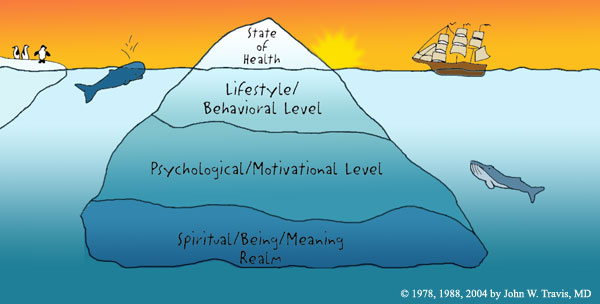
Dr. Travis also created The Illness-Wellness Continuum to be able to track harmony.

OUR TOOLS FOR THE JOURNEY
MINDFULNESS AND MEDITATION
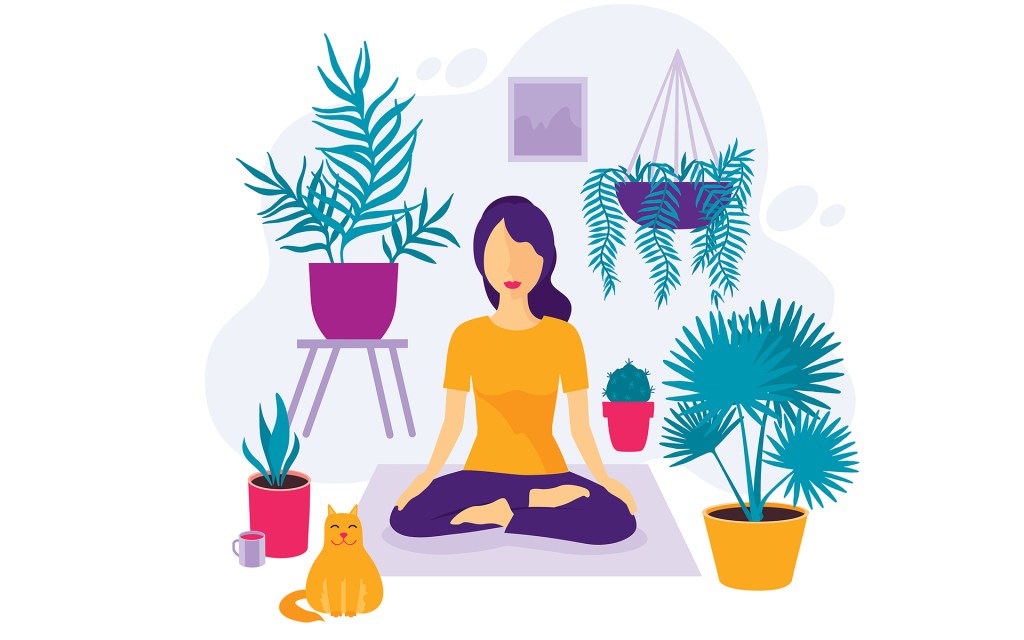
Mindfulness is a technique that allows us to be in the moment and center us.
Meditation is a technique that nourishes our brain and regulates our nervous system.
HERBERT BENSON, M.D., bensonhenryinstitute.org, created a method he named
THE RELAXATION RESPONSE
Two scientifically-proven treatments for stress and for all the diseases that cause and/or exacerbate stress are:
Choose a word, phrase, or prayer that is firmly rooted in your belief system as your focus.
Examples: One, Peace, The Lord is My Shepherd, Hail Mary Full of Grace, Shalom.
Sit quietly in a comfortable position.
Close your eyes.
Relax your muscles progressing from your feet to your calves, your thighs, your abdomen, your shoulders, your head, your neck.
Breathe slowly and naturally and, as you exhale, say your focus word/short phrase/prayer to yourself.
No judgment or worry if you are doing it correctly or incorrectly.
When thoughts enter your mind, say to yourself, “Oh, well,” and gently return to your focus word/short phrase/prayer.
Continue for ten to twenty minutes.
Do not stand immediately.
Continue to sit quietly allowing thoughts to return.
Open your eyes and sit another minute or two before you rise.
Practice once or twice a day preferably before breakfast and before dinner.
Sitting comfortably in your chair, slowly close your eyes.
Feel the soles of your feet.
Feel your lower legs, your knees, your upper legs, your thighs.
Feel your low back, your mid-back, your upper back, your shoulders allowing them to become heavy.
Feel your upper arms, your elbows, your forearms, your wrists, your palms, your fingertips.
Feel your belly, your ribcage, your chest.
Invite your face to soften to allow your jaw and your mouth to relax.
Allow your eyebrows, the space between your eyebrows, and your eyes to become heavy.
Relax your forehead, your temples, your head, and the top of your head.
Focus on your breath.
Deepen your breath.
Lower your chin to your chest and rock your head from side to side.
When you are ready to return to the here-and-now, slowly open your eyes.
OUR NERVOUS SYSTEM AND STRESS
THE AUTONOMIC NERVOUS SYSTEM (ANS) consists of the SYMPATHETIC NERVOUS SYSTEM (SNS) that controls and regulates the internal organs without any conscious recognition or effort and the PARASYMPATHETIC NERVOUS SYSTEM (PNS) that allows us to rest and digest.
Hans Selye, M.D., in “The Stress of Life,” wrote, “It is not to see something first, but to establish solid connections between the previously known and the hitherto unknown, that constitutes the essence of scientific discovery. It is this process of tying together which can best promote true understanding and real progress.” He also wrote, “It may be said, without hesitation, that for the man the most important stressors are emotional.”
In a state of acute stress, we perceive danger, real or imagined, and the SNS activates the amygdala and the limbic brain for fight or flight or freeze.
ALLOSTATIC LOAD
Bruce McEwen, Ph.D, coined the term, allostatic load, to describe the cumulative burden of chronic stress and everyday life events. https://www.rockefeller.edu/about/history/oral-history-project/interview-bruce-mcewen/
POLYVAGAL THEORY
Stephen Porges, Ph.D., stephenporges.com, polyvagalinstitute.org, author of many books including “Polyvagal Safety,” developed the polyvagal theory in 1994. Polyvagal tone consists of dorsal vagal/disassociated/immobilized and ventral vagal/safe/connected to self and others in co-regulation, social engagement, growth, and restoration.
He believes the words, “anxiety” and “stress,” dishonor the body and prefers “defense” and “threat” to describe physiological destabilization. If, for example, a person pushes and continues to push, without rest, the body will eventually rebel because it has had enough, as is the case in fibromyalgia.
He notes that although meditation is safe for some people, it may be unsafe for others in whom it causes too much vulnerability.
Stephen Porges posits that acquisition cultivation (more money, more possessions, more of everything) is a fight-flight driven motivation. It is not safety, so what is safety? Social engagement cues (eye contact, facial expressions, listening, and voice intonation) via vagal nerve activation. The social engagement system is the evolutionary story to become a social entity by co-regulating (feeling safe with another), but if a person has no memories of safety, being accessible to someone will feel unsafe. If the cues are absent due to cautious physiology, the person must flee the environment. It is not crazy. It is a healthy response. The body has its own mind to send signals.
OLD ANS MODEL VERSUS NEW ANS MODEL
Originally, the autonomic nervous system (ANS) was only able to experience death/faint/immobilization/shut down. Then, it evolved to mobilization. Eventually, it developed into social engagement.
Reptiles had only one circuit of the vagal system, that is, below the diaphragm. Their defense was diarrhea and irritable bowel syndrome. Mammals have two circuits of the vagal system, that is, below and above the diaphragm, as a result of adaptation to social engagement. When we experience fight/flight, we can choose to communicate and be accessible.
DEFINITIONS
Interoception is the awareness of how a person feels in the body.
Neuroception determines if the environment is safe or unsafe.
Embodiment (connection of the brain and body) is a complex journey.
Movement, specifically, dance, is extremely helpful because it allows the body to counter immobilization/death/shut down and informs the body that it is safe.
Dr. Porges cites that stillness is on a continuum with accessibility at one end and vulnerability at the other end. While he loves stillness, he acknowledges it is a threat cue for some people.
WHAT IS THE VAGUS NERVE?
It is the longest nerve of the autonomic nervous system. It runs down the front of our body from our brain stem to our colon and down the back of our body back to the brain.
WHAT DOES THE VAGUS NERVE DO?
It modulates sensory (somatic/what we experience in our muscles and skin) and visceral (motor pathways/what we experience in our mouth, throat, lungs, heart, digestive tract, and liver).
HOW IMPORTANT IS THE VAGUS NERVE?
80% of the messages that go to the brain originate in the body (increase/decrease our heart rate, bile and digestive enzymes, mood hormones, oxytocin and serotonin, and hormones, peptide choleycystokines, ghrelin, and leptin that determine the rate of absorption, storage, and utilization of the nutrients) while only 20% of the messages that go to our body originate in the brain.
The vagus nerve sends anti-inflammatory signals through three pathways: HPA Axis (hypothalmic-pituitary-adrenal) which determines our body’s response to stress and the reason we produce cortisol; vago-splenic pathway which releases noradrenaline and acetylcholine; cholinergic anti-inflammatory which releases acetylcholine to inhibit inflammatory molecules.
WHAT DAMAGES OUR VAGUS NERVE?
Infection, inflammation, physical stress, psychological stress
HOW CAN WE TEST FOR DAMAGE?
Does our gag reflex work?
Do we have difficulty talking? Are we hoarse? Do we lose our voice? Do we have a change in our voice?
Does our blood pressure dip (vasovagal syncope in which we have a low heart rate, we faint, we have organ damage)?
Do we have digestive enzymes? Hypochlorhydria (low acid production)? Dry heaving? Bloating? Pain? Nausea? Vomiting?
Do we have dysphagia (difficulty swallowing and eating)?
Do we have auricular pain (ear especially down the side of the neck)?
What is the state of our mental health?
Do we experience anxiety and depression as a result of long-term inflammation?
HOW TO ACTIVATE OUR VAGUS NERVE
Cold stimulation triggers peripheral vasoconstriction by shifting blood volume to the core to make our body work harder to keep warm. Try splashing cold water on your face.
Chant
Gargle
Hum
Meditate
Sing
Sleep on your side
Social Connection
Yoga
Donna Eden’s Daily Energy Routine
CHANGE
SLEEP, OUR RENEWAL SYSTEM
youtube.com Marconi Union Weightless (official video)

DEVELOP AND ESTABLISH A MORNING ROUTINE
MODIFY WHEN NECESSARY
Decide how you choose to start your day.
While you are still in bed, notice where your body is tight.
Inhale and contract those areas.
Exhale and release those areas with an audible expression like “whoosh” or “aaah.”
Place a positive image in your mind.
Say a positive statement aloud to your self.
Seek inspiration in a book of fiction or non-fiction.
Have a conversation with a trusted person.
Pursue an interest in which you lose your self and, as a result, are refreshed and renewed.
Attend a meeting with people who have a common interest and mission.
Write at the end of the day.
SAMPLE TEMPLATE:
TODAY __/__/____
As soon as I opened my eyes, I stretched my body where it felt tight. ___ Yes ___ No
I did Donna Eden’s Daily Energy Routine ___ Yes ___ No
I meditated/prayed/reflected/wrote for _____ minutes.
I walked barefoot on the grass in the sun for ___ minutes.
I practiced self-care when:
I ate these nutritious foods:
I had these thoughts:
Tomorrow, my focus will be:
What I will do to accomplish this:
Write in your epiphany journal.
What insights can you record?
Write in your gratitude journal.
Take a minute to be grateful. Consider a memory you associate with a favorite possession, a meal you lovingly prepare for those who will share it with you, a flower or leaf to admire the wonder of nature.
What put a smile on your face? What has gone well that you anticipated would not go well? Who do you admire (living or deceased)? Why do you admire this person?
Write in your joy journal.
When did you have a moment of joy today? Describe it in detail.
Create a memory journal.
amytangerine.com Amy Tangerine’s 2022 book, “MAKING MEMORIES Practice MINDFULNESS Learn to JOURNAL and SCRAPBOOK Find CALM every day”
AFTERNOON, EVENING, BEDTIME ROUTINES TO SCHEDULE JUST AS YOU DO ANY IMPORTANT APPOINTMENT
BODY SCAN
Find a comfortable seated position that allows your spine to be straight and your shoulders to drop. Sitting, feet on the ground or lying down with your head supported.
Gaze downward in front of you or close your eyes.
Identify where your back, bottom, and feet make contact.
Notice your breath.
Begin to scan from head to toe observing any feelings or emotions.
If you detect several, choose one.
Notice where it is in your body.
Is it large or small?
Is it heavy or light?
Is it hard or soft?
Does it have a texture?
Does it have a color?
Does the color change or stay constant?
Does the feeling move or remain still?
Give it a name.
If you can’t, it’s okay.
Being kind to yourself, continue to observe it with curiosity and without judgment until its nature becomes more and more clear.
Continue to acquaint yourself with it until you are able to understand it.
When you are ready, return your attention to the here and now.
Practice as often as possible.
PROGRESSIVE MUSCLE RELAXATION
Begin by making yourself as comfortable as possible in whatever position is best for you.
Take several long, slow, deep breaths.
Allow the noises around you to dissipate.
Bring your attention to your feet. Notice whatever sensations you feel without judgment. Wiggle your toes sending your breath to these parts of your body.
Bring your attention to your ankles, calves, knees, and thighs. Notice whatever sensations you feel without judgment. Rotate your ankles, flex your calves, bend your knees, and contract your thighs sending your breath to these parts of your body.
Bring your attention to your pelvis and your lower back. Notice whatever sensations you feel without judgment. Lift your pelvis slightly and stretch your lower back sending your breath to these parts of your body.
Bring your attention to your belly and your diaphragm. Notice whatever sensations you feel without judgment. Allow your belly and diaphragm to expand sending your breath to these parts of your body.
Bring your attention to your chest and heart. Notice whatever sensations you feel without judgment. Place your right hand on your chest and heart. Place your left hand over your right hand. Send your breath to these parts of your body.
Bring your attention to your upper arms, forearms, and wrists. Notice whatever sensations you feel without judgment sending your breath to these parts of your body.
Bring your attention to your hands and your fingers. Shake your hands and wiggle your fingers. Notice whatever sensations you feel without judgment sending your breath to these parts of your body.
Bring your attention to your neck, your chin, your jaw, your mouth, your cheeks, your ears, your eyes, the space between your eyebrows, your temples, and your forehead. Notice whatever sensations you feel without judgment. Tighten all your muscles and then release all your muscles.
Bring your attention to your scalp and your head. Notice whatever sensations you feel without judgment sending your breath to these parts of your body.
Bring your attention to your entire body.
Your entire body.
Take several long deep breaths.
When you are ready, bring your attention to the smells and sounds of your environment as you emerge into the here-and-now.
CRYSTALS
Crystals originate in the earth and can, therefore, impact our energy.
CONSIDER
amethyst for clarity and intuition
ametrine for connection
aventurine for calm
black tourmaline for protection
bloodstone for vitality
carnelian for creativity
citrine for joy
green aventurine for manifestation
honey calcite for empowerment
rose quartz for love
selenite (on your computer) for protection against EMFs
turquoise for communication
EMOTIONAL FREEDOM TECHNIQUE
Acupuncture uses energy meridians to treat physical problems.
1962, George Goodheart, chiropractor, developed kinesiology/muscle testing.
John Diamond, M.D., psychiatrist, developed behavioral kinesiology using affirmations (positive self-statements or thoughts) to treat emotional problems. This led to energy psychology.
In the early 80’s, Roger Callahan, Ph.D., rogercallahan.com, psychologist, studied anxiety and phobias. He helped Mary’s phobia of water in one session using his sequences (algorithims) of his Callahan Techniques Thought Field Therapy, a/k/a TFT.
In 1987, Patricia Carrington, Ph.D., patcarrington.com, psychologist, used TFT principles to develop Acutap, the tapping of all points every round. She did not use muscle testing. Later, she adopted EFT because it has features Acutap did not have. She said, “Eventually, it is likely that Meridian Tapping in all its major forms including EFT and TFT will radically change the psychological treatment protocols for traumas as well as for many other emotional problems previously considered treatable only by lengthy and usually only partially effective procedures.”
In the early 90’s, Gary Craig, emofree.com, Official EFT Training Centers, Stanford-trained engineer and personal performance coach, a student of Roger Callahan, named his single algorithm, EFT.
Carrington and Craig determined separately that Callahan’s elaborate sequences (algorithms) were no more effective than the single-algorithm method.
Mary Ayers, tapintoaction.com
Kim d’Eramo, dr.KimD.com, founder of the American Institute of Mind Body Medicine, on the 16th World Tapping Summit in 2024, stated that sleep is our most productive time. She says the prevalence of insomnia is due to the overstimulated nervous system during the day. She recommends tapping at bedtime to tell the body that it’s okay to let go and release. For example, try the set-up statements of “Even though I am worried I won’t sleep, I choose peace. Even though I need to be in control, I choose peace. Even though there is so much to do, I choose peace.” Then tap on the points stating exactly what’s negative in your mind and, after you have calmed your nervous system, tap on what’s positive for your future. In the morning and throughout the day for twenty-one days, she says a 30-second “I love you” will start to change your brain.
In https://www.frontiersin.org/articles/10.3389/fpsyg.2022.856209/full, David Feinstein https://edenenergymedicine.com/about-us/david-feinstein/ states: “Energy psychology is a novel treatment for emotional healing and psychological development that involves the somatic stimulation of acupuncture points (acupoints) by tapping on them with the fingertips. https://www.frontiersin.org/articles/10.3389/fpsyg.2023.1277555/ (David Feinstein’s wife is Donna Eden, edenenergymedicine.com, has you tube videos to instruct you to work with your body’s energy system.)
On Day 1, February 26, 2024, of thetappingsolution.com 16th Annual World Tapping Summit, Jessica Ortner interviewed David Feinstein for an update of his Six Pillars of Energy Psychology a/k/a Emotional Freedom Technique a/k/a Tapping. He mentioned how there had been no research but now there is a higher effect size in meta-analyses that show, for example, significant gain in PTSD in just one session. In nine out of ten head-to-head studies comparing cognitive behavioral therapy and tapping re impact, improvement, and speed, tapping was more effective. It can be used on its own or integrated with other therapies. Some therapists may be referring to it as a relaxation technique as opposed to tapping. The Six Pillars are: 1. It works. 2. It’s fast. While cognitive behavioral therapy for PTSD might require twelve to sixteen sessions, tapping may require six to eight sessions. 3. It has lasting benefits. After Dr. Feinstein introduced to leaders after the cessation of apartheid in Rwanda, tapping was still effective two years later. 4. Biological markers a/k/a physiological changes in brain waves, cardiovascular state, hormones, immunity, and others. 5. The Tapping Technique of the words “Even though” (cognitive intervention) “I have anxiety” (exposure therapy), “I accept myself.” When diaphragmatic breathing, mindfulness techniques, and sham points were substituted for tapping, subjective results were that tapping, even without using words, worked better. 6. Dr. Feinstein’s hypothesis of the durability of tapping: Tapping reconstructs the neural circuits that maintain maladaptive mental models which he explains in seven pieces. Piece 1: To explain how tapping on the skin affects and changes the brain, tapping on an acupoint generates an instantaneous signal to areas of the body via semi-conductor collagen in connective tissue. There are molecules called mechanoreceptors in our cells that generate electricity when tapped or stimulated mechanically thereby creating electrical impulses called piezoelectricity (pronounced piezo, rhymes with typo). Piece 2: The signals may de-activate arousal in the threat response area in the limbic system known as the amygdala or emotion center. This is the result of a ten-year Harvard acupuncture study. In acupuncture, the points are called sedating points. Piece 3: The signals may activate executive function areas in the brain by increasing blood flow that enhance stress management. In acupuncture, these points are called tonification points. Piece 4: The words and/or images a therapist or person who is tapping uses to prompt activate the areas in the brain that govern the issues being addressed confirmed by Peta Stapleton in two imaging studies. Piece 5: The reason that tapping has lasting effects is due to the de-activation and activation of areas of the brain. Piece 6: Tapping can target precise areas. Piece 7: Reconsolidation or what is initiated when what is experienced is not what was expected, i.e., a surprise. A surprise changes neurology in that dopamine is released which dismantles existing mental models and replaces them with new or revised models. For example, as a result of tapping on the irrational fear of spiders, a picture of a spider no longer produces the usual panic because tapping turned off the threat response and created a new normal. Neurologists call this a prediction error. Prediction errors open neurons to learning a new association. Tapping allows a person to listen to his body, apply tapping, and change his stress response. Removing the charge from the issue, the person becomes more rational about the issue. It strengthens the executive regions of the brain, the front cortex, that increase good judgment. In terms of pain, however, the situation is more complex because pain is the body’s warning signal to be less forceful with the body part in question and be gentle with one’s body to allow it to heal. The goal is calm in order to be creative, resourceful, innovative. Jessica cited that when have less pain and feel better, we can be inspired to look at how we communicate, what we eat, etc. Managing chronic pain can involve belief that nothing works nor ever will, disregard in the availability of support, disinterest in possibilities, hopelessness. When tapping works, a new world becomes the “new normal.” We may want to explore how else we can support our body. Tapping makes us smarter in that we have opportunities to examine and explore how to continue to help ourselves. Unfortunately, Dr. Feinstein acknowledges that many institutions (hospitals, the military, and the VA) have yet to embrace tapping but believes that it, in addition to other somatic interventions, will become a standard procedure for pre- and post-surgery.
Carol Look, carollook.com
Alex Ortner, Nick Ortner, and Jessica Orner, thetappingsolution.com: Tapping, pressing on, or even visualizing meridian end points has been proven by fMRIs to interrupt fight-flight-freeze and calm our nervous system. When we are in fight-flight-freeze, it is physiologically impossible to access our pre-frontal cortex to perceive options and allow for constructive decision-making.
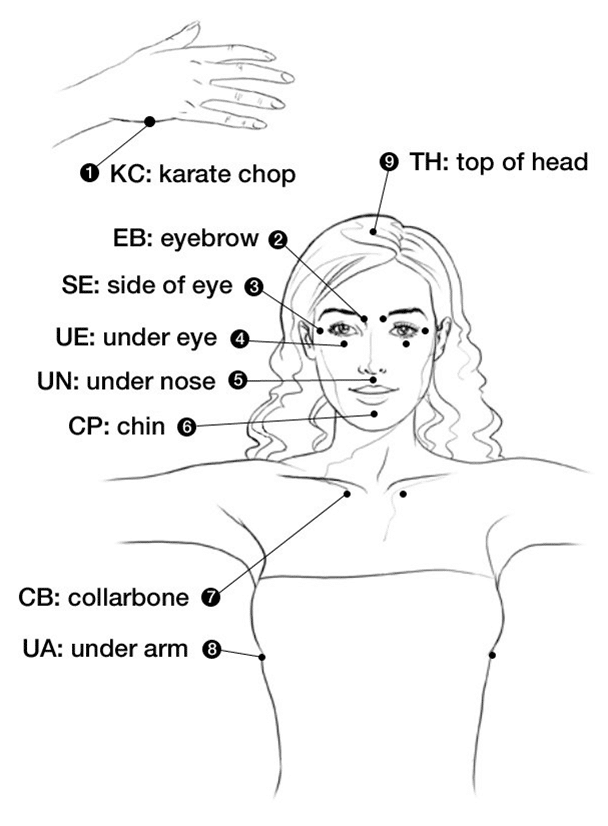
There are additional points to tap.
HOW TO TAP/PRESS:
Identify the problem. Examples: thoughts, pain, worry
Rate how you feel 0-10.
Write it down.
Start with the negative and, when the door opens, do the positive.
Karate Chop (KC): Even though I’m overwhelmed, I can be open to a shift. Even though I’m overwhelmed, I am curious for a different experience. Even though I’m overwhelmed, I value myself.
EB (eyebrow) Overwhelmed
SE (side of eye) Overwhelmed
UE (under eye) For a long time
UN (under nose) Feeling overwhelmed
UM (under mouth) Too long
CB (collarbone) Too much
UA (under armpit) Overwhelmed
TH (top of head) Too long
WT (insides of wrists together) Overwhelmed
Shake your hands.
Rate how you feel 0-10.
EB Overwhelmed
SE A lot to do
UE Overwhelmed
UN Yet maybe there is a way
UM Another choice
CB I can try
UA To experience something different
TH That I can receive with curiosity
WT That help me
Rate how you feel 0-10.
Compare it to your original rating.
Continue to tap to lower your number.
Cultivate your practice and build your confidence by tapping for five or ten minutes on a simple problem.
Write down your experience(s).
Note the issues that arise to use for future tapping sessions.
Tapping or pressing or visualizing is a tool to make space for feelings that need to be processed and metabolized so they don’t impact us physically (somatizing). Tapping advances healing because it shifts energy.
In Nick Ortner’s August 15, 2024, inspiration email, he lists five signs that we are ignoring our intuition. When your gut is screaming, tap asking what is my gut trying to tell me? When you pretend everything is great, tap asking how do I really feel about my life? When you are unmotivated to improve, tap asking why am I resistant? When your life is unbalanced, tap asking how would I feel if I were living successfully? When you adapt to fit others, tap asking why do I feel a need to belong with people who don’t align with my interests, needs, and wants?
Julie Schiffman, julieschiffman.com Julie’s tips: Schedule your tapping routine. It works only if you do it, so do it regularly. Remove all distractions in order to concentrate. Always rate the intensity of your issue before you tap. When you wake in the morning, tap on whatever pops into your head. When something bothers you during the day, breathe and touch each point or imagine in your mind that you are tapping. If neither is possible, take notes for a time when you will be able to tap. When you review the events of the day, tap. When you prepare for bed, tap on restful sleep. Tap on the left side, right side, or both sides because the meridians run down both sides of the body. Options for “I completely and deeply love and accept myself are: I recognize I have _____ (problem). I am kind and compassionate to myself. I am open to forgiving myself. I am ready to see the problem in a different way. I want to progress. I commit to change the story. I release. Say the words aloud because something we say things different when they are finally out of our head. Always tell the truth. Use your own words so that your experience is as personal as possible. Be specific. Two examples: My head hurts. I have throbbing pain behind my right eye. I am upset with my cousin. She has, like many times in the past, texted me fifteen minutes before we are to meet that she has to cancel. Continue to tap on whatever arises. Continue to tap until you have relief. Belching, burping, crying, laughing, tingling feelings, and yawning are all completely normal. They move energy. On the 16th World Tapping Summit, she explained how it is necessary to express emotions. She demonstrated tapping on shame using set-up statements such as “Even though I have secrets, I accept myself. Even though I have shame because I have kept secrets, I honor myself. Even though I have been unable to express what has happened to me, I am safe now to release because I have support.”
Peta Stapleton, petastapleton.com, psychologist, is the author of “The Science of Tapping,” 2019, a review of 120 clinical trials. Stapleton refers to energy psychology and other somatic interventions as comprising the “fourth wave” of psychotherapy, following psychoanalysis, behavior therapy, and cognitive approaches.” On the 16th World Tapping Summit, on February 26, 2024, Stapleton noted she used tapping under the table with clients twenty years ago. Her first trial fifteen years ago was on cravings. She says research is necessary because it receives attention and approval as evidence-based treatment that provides a wider reach for, say, insurance benefits. She cites a 2021 Korean study which proved that stimulation of the acupuncture points impact the brain. She says evidence for its speed and effectiveness has been rapidly accumulating, demonstrated in more than 120 clinical trials and reviewed in the book, The Science of Tapping (Stapleton, 2019).” She refers to energy psychology and other somatic interventions as comprising the “fourth wave” of psychotherapy, following psychoanalysis, behavior therapy, and cognitive approaches.” On the 16th World Tapping Summit, on February 26, 2024, she notes she used tapping “under the table” twenty years ago. Her first trial fifteen years ago was on cravings. She says research is necessary because research receives attention and approval as evidence-based treatment which provides a wider reach for, say, insurance benefits. She cites a 2021 Korean study which proved that stimulation of the acupuncture points impact the brain. She says stress is biological. It is inflammation in the body. Her current focus is on chronic pain. Stress is biological. It is inflammation in the body. Her current focus is on chronic pain.
A START-MY-DAY SCRIPT
Rate how you feel 0-10.
Write it down.
Breathe in.
Breathe out.
Either aloud or in your mind,
On the KC: On this glorious gift of a day, I honor myself. On this glorious gift of a day, I honor my needs. On this glorious gift of a day, I am enough.
EB: I create the environment
SE: In my self
UE: That nourishes my creativity
UN: My resourcefulness
UM: And my wholeness
CB: I use the tools
UA: To the best of my ability
TH: That embody peace and joy
EB: I am mindful in the moment
SE: My actions are effortless
UE: Throughout my day
UN: I am aware that all my senses inform me
UM: Every step of the way
CB: For my best interests
UA: Allowing me the privilege of
TH: Making choices that honor me
EB: I acknowledge
SE: To my self
UE: That I am inspired yet balanced
UN: Energized yet calm
UM: Focused yet peaceful
CB: With the ability
UA: And willingness
TH: To manifest
EB: Inner peace
SE: Inner joy
UE: Inner tranquility
UN: Because I am confident
UM: Safe
CB: Strong
UA: And, most importantly,
TH: Enough
Breathe in.
Breathe out.
Rate how you feel 0-10.
Write it down.
How does it compare to how you felt before you tapped?
Did it change?
Better?
Same?
Worse?
Tap/press again to reduce your number if you have time.
If not, tap when you can.
AN I-AM-AT-EASE SCRIPT
Rate how you feel 0-10.
Write it down.
Breathe in.
Breathe out.
Either aloud or in your mind,
KC: Even though I feel unsettled right now, I deeply and completely accept myself. Even though I feel unsettled right now, I allow myself to feel this way. Even though I feel unsettled right now, I choose to experience ease.
EB: I take a deep breath
SE: And remind my self
UE: I am doing my best
UN: To empower my self
UM: To regulate my nervous system
CB: To be safe
UA: In this moment
TH: Right here, right now
EB: I grow more and more capable
SE: Of increasing my stability
UE: I acknowledge the reality
UN: That total ease is impossible
UM: So I choose to guide my energy
CB: To be resilient
UA: And strong
TH: As I calm my self
EB: I prove that I trust my self
SE: That I support my self
UE: Today and always
UN: I learn self-reliance
UM: And how to create a safe place
CB: Instilling peace
UA: Within my self
TH: At ease
EB: I am worthy
SE: In my brain
UE: In my body
UN: In my BEing
UM: I have skills and strategies
CB: That help me as I navigate the unknown
TH: Uncertain yet confident
Breathe in.
Breathe out.
Rate how you feel 0-10.
How does it compare to how you felt before you tapped?
Did it change?
Better?
Same?
Worse?
Tap/press again to reduce your number if you have time.
If not, tap when you can.
Willem Lammers, MSc, DPsych, TSTA, https://www.logosynthesis.net/logosynthesis/willem-lammers-2/, created logosynthesis, “Change your Self through the Magic of Words,” in 2005. He describes it as an efficient, elegant, gentle, quiet, slow, subtle coaching, counselling, psychotherapy, and self-coaching tool to resolve frozen thinking patterns and emotions.
Three basic sentences are the foundation of the process that begins the dive into layers of an experience: “I retrieve all my energy bound in this image of _______ (trauma) and I take it to the right place in myself.” This establishes a natural boundary against haunting impressions. “There is energy of other people involved so I remove that energy.” I retrieve all my energy bound in all my reactions.” What arises is usually a replay of similar circumstances in the past. The three sentences are then used to neutralize it.
ESSENTIAL OILS (AROMATHERAPY)
https://www.medicalnewstoday.com/articles/324478
GUIDED IMAGERY

WHITE LIGHT FOR SELF-REGULATION
See this spectacular Elsa Sass Peony in your mind. Imagine bright white light beaming into the top of your head flowing into every cell of your body all the way to the soles of your feet.
Inhale, saying to your self or aloud, “I am calm.”
Exhale.
Inhale, saying to your self or aloud, “I am love.”
Exhale.
Inhale, saying to your self or aloud, “I am safe.”
Exhale with an ENORMOUS AUDIBLE SOUND from deep inside like a gushing waterfall as you expel fear, misery, and pain that you no longer need to hold within you.
Repeat until you feel refreshed and renewed.
Center your self.

FALLING LEAVES FOR SELF-LOVE
Attending to myself is non-negotiable.
Acknowledging my needs reduces overwhelm.
When I express my BrainBodyBEing, I practice self-love.
Honoring my breath is essential.
It was my first action in life.
It serves me in every situation.
It meets the demands of all circumstances.
It accommodates me in my ever-changing environment.
It flows effortlessly when I relax.
Deep belly breaths throughout my day expand my BrainBodyBEing in spectacular ways.
I inhale 2, 3, 4.
I exhale 2, 3, 4.
I inhale, 2, 3, 4, 5.
I exhale, 2, 3, 4, 5.
I inhale 2, 3, 4, 5, 6.
I exhale 2, 3, 4, 5, 6.
I inhale as deeply as I can and hold it as long as is comfortable.
I exhale tension.
I inhale fresh oxygen to go to my bloodstream.
I exhale tension.
I inhale rejuvenation.
I exhale tension.
I inhale invigoration.
I exhale tension.
I inhale self-love.
I exhale self-criticism.
I notice my thoughts now.
I see them come.
I see them go.
Some thoughts linger.
Some thoughts last a second.
I notice negative thoughts.
I imagine myself in the woods in very late autumn.
The breeze is strong and leaves are starting to fall.
Each time I have a negative thought, I place it on a leaf.
I watch it fall to the ground.
Gone from the sky.
Another negative thought arises.
I place it on a leaf.
Gone.
Another.
On a leaf.
Gone.
Another.
On a leaf.
Gone.
I can not stop all negative thoughts, but I can watch them as they fall to the ground.
As the brain is wired in negative-bias mode, I consistently need many positive thoughts to counter one negative thought.
I can do this because I accept my self.
I deeply accept my self.
I deeply and completely accept my self.
I love my self.
I deeply love my self.
I deeply and completely love my self.
I value my self.
I deeply value my self.
I deeply and completely value my self.
I deserve love.
I deeply deserve love.
I deeply and completely deserve love.
When I love myself, I open my self to love others.
I breathe deeply as I prepare to return to the here-and-now.
I know I can return anytime to this place of acceptance and love that is waiting for me with open arms.
I commit to return.
Center your self.

I AM THE OCEAN, NOT THE WAVES FOR CALM
Sit, recline, or lie in as comfortable a position as possible.
Right hand on heart.
Left hand on belly.
Slowly close your eyes.
As you inhale, notice your which hand rises.
Concentrate on deepening your belly breath with each inhale.
Be open to the tension you might feel in your body and allow yourself to release as much of it as you can.
In your mind’s eye, you see the ocean.
You observe the ebb and flow of the waves.
It has a rhythm your body begins to mimic.
Despite the activity, the ocean is calm.
Despite the emotions, feelings, thoughts, memories, and sensations that may swirl in your brain, you are calm like the ocean as you follow its steady pattern.
Take a deep cleansing breath.
Acknowledge what you are witnessing.
Return whenever you need or want.
Slowly open your eyes.
Shake your hands.
Wiggle your toes.
Straighten your back.
Bend your head back.
Bend your head forward.
Rotate your head to look over your right shoulder and then your left shoulder.
Center your self.

I AM THE SKY AND MY THOUGHTS ARE THE CLOUDS FOR CALM
Sit, recline, or lie in as comfortable a position as possible.
Right hand on heart.
Left hand on belly.
Slowly close your eyes.
As you inhale, notice your which hand rises.
Concentrate on deepening your belly breath with each inhale.
Notice the tension you might feel in your body and allow yourself to release it as best you can.
In your mind’s eye, see the sky in all its glory.
It is stable, permanent, infinite.
Say to your self: I am the sky.
I am stable, permanent, infinite.
Say to your self: My thoughts are the clouds.
They are different colors.
They are different shapes.
They are different sizes.
They move like the clouds move.
They change like the clouds change.
They disappear like the clouds disappear.
Say to your self, When I notice a thought, I see it as a cloud.
I bear no judgment, no shame, no blame for it.
It is just a thought.
I am free to decide what thoughts are helpful.
Acknowledge what you are experiencing.
Know you can return whenever you need or want.
Stand and extend your arms upward.
Arms down, bend and touch the floor with your fingertips as best you can.
Center your self.
GIFTS FOR YOUR SELF

THE MOST IMPORTANT RELATIONSHIP
The relationship I have with my self is the most important relationship I will have in my life.
It is the foundation for all my relationships.
I need to know my self, my story, my triggers, and how to responsible effectively.
I want my attitude and behavior to sparkle and shine.
I remind myself to fill my cup before I would attempt to fill someone else’s.
My BrainBodyBEing requires replenishment and restoration on a regular basis in a manner that suits me.
I accept that I co-create the situations in which I find myself.
I take responsibility for the decisions I make and the consequences that ensue.
I listen to the messages and signals my body sends to me in order to set boundaries.
Healthy parameters protect me and others.
They align with my BrainBodyBEing.
It can be confusing when my brain is in safeguard mode.
It can be comforting when my body is in receptive mode.
Knowing that the stillness of my BEing can point me in the direction that best serves me.
This is resilience in action.
The process takes patience.
Small steps are significant.
I have an enduring commitment to my health.
I give myself hugs and kisses to fortify nurture my self.
My nourishment is an inside-out job.
I grow from the inside.
I learn from the inside.
I give my self every opportunity to reveal my authenticity.
I love my self.
I melt into self-love.
I have power.
I carry it throughout my day.
Center your self.

ENERGETIC VIBRATION
Place each thumb on the tragus (the pointed front of the opening of your ear) and your other fingers on your temples.
Hum.
Feel the sound and vibration deep within your head.
Stop.
Take a deep cleansing breath.
Repeat two more times.
Center your self.

AFFIRMATIONS
An affirmation is a statement that can change a thought pattern.

CLEAR SPACE TO ACHIEVE CHANGE
I honor my values.
I consciously my values to my behavior.
When I connect with my self, I allow my self to prioritize the best in me.
I know positive things are possible for me.
I persevere every day to empower my self to create the life I see for my self.
I ignite my spark to spread my light.
I express my passion.
I use my skills.
My perspective takes nothing from anyone.
The world is a wondrous place for all who wish to aspire.
RELEASE
I release all thoughts of “should have had.”
I release all thoughts of “shouldn’t have had.”
I release all thoughts of “could have had.”
I release all thoughts of “couldn’t have had.”
I release all thoughts of “would have had.”
I release all thoughts of “wouldn’t have had.”
I release all thoughts of “what should.”
I release all thoughts of “what shouldn’t.”
I release all thoughts of “what could.”
I release all thoughts of “couldn’t.”
I release all thoughts of “what would.”
I release all thoughts of “what wouldn’t.”
I center myself in the present moment.
MEDITATIONS

HEART LOVE
One hand on my heart and one hand on my belly, with each inhalation, I invite my self to relax.
With each exhalation, I release tightness.
With each inhalation, I invite calm.
With each exhalation, I release tightness.
With each inhalation, I invite equanimity.
With each exhalation, I release tightness.
Both hands on my heart, I bring my attention to my heart.
I thank my heart for the important role it plays in my life.
From this moment forward, I recognize my need to be grateful to my heart for serving me.
I bring my attention to my self.
I ponder all the gifts I possess.
All my skills.
All my talents.
I thank them all for the way they enrich my creativity, resourcefulness, and wholeness.
I celebrate my self.
No one in the world has ever been, is, or will ever be me.
That is my strength.
My anchor.
I take a deep breath and enjoy the sensation of this connection to my self.
My appreciation for my worldly BEing and my spiritual BEing.
My authenticity.
My self-confidence.
My self-esteem.
This is not selfish.
This is not egotistical.
This is appreciation for my life.
May I carry this peace throughout my day.
And so it will.

JOY
As I start my day, so shall it go.
I choose to believe this is a special day.
I inhale oxygen and exhale whatever was happening a few days ago, weeks ago, years ago.
I immerse my self in the here-and-now.
I am fully aware of and engaged in the moment.
This is a precious time to prioritize.
I am grateful for the one who is always with me.
I am grateful for the one who is my best friend forever.
I am grateful for the one who sees me through every episode of my life.
I am grateful for the one who carries me in the ups and the downs.
I am grateful for my BrainBodyBEing.
I say thank you for your loyalty.
As I venture into the world today, I am inspired to share this joy.
I will silently bless every face I encounter.
To every person, I will wish love and peace and, most importantly, the joy of life.

RESILIENCE AMID THE CONSTANT THAT IS CHANGE
I wake anew.
The cells in my body are different than they were yesterday.
I am an ever-involving individual.
I am on a path of growth and transformation.
If not, I require the self-awareness to identify what I need to change and accept that the practice of baby steps will lead me to achievable goals.
When necessary, I modify my plan.
The world is also in a continuum of change.
It, however, does not necessarily help us in the pursuit of our virtues.
It presents obstacles throughout our lives in the form of potholes, ditches, hills, and mountains.
Potholes, we can observe and swerve to circumvent.
Ditches, if we are fortunate, may involve a kind observer who may use a truck and a rope to extricate us.
Hills are navigable when we have the correct tools to climb them.
In addition, hills are red flags.
If we listen, they alert us to impending overwhelm so we can avoid hills becoming mountains.
Mountains are what we need to educate ourselves to notice so we can avoid them as much as possible on our journey.
Over the course of our lives, our job is to learn to pack for our journey.
Deciding what to take and what to leave is the responsibility to which each of us holds ourselves accountable.
This is a moment-to-moment daily exercise that we practice in order to savor the best that life has for us to experience.
Not always immediate gratification.
Not always what shines the brightest.
Not always what suits the people with whom we associate personally and professionally.
But a view of our lives from a distance with a legacy to create and establish for ourselves.
https://www.verywellmind.com/how-important-is-alone-time-for-mental-health-5184607

TIME ALONE IN NATURE
Why is time in nature healthy?
Plants, especially trees, produce organic airborne chemicals called phytoncides that help defend them against predators and rotting.
In 1928, Boris Tokin, Russian biochemist, coined the term, phytoncide, meaning “exterminated by the plant.”
In December, 2009, in “Trends in Immunology,” Dr. Qing Li wrote “phytoncide exposure significantly increased NK (Natural Killer) activity and the percentages of NK, perforin, granulysin, and granzyme A/B-expressing cells.” Dr. Qing Li is the founder of the forest bathing movement and Chairman of the Japanese Society for Forest Medicine.
Just by breathing, we inhale these anti-bacterial and anti-fungal immunity boosters.
Just by being curious, we are able to enjoy the beauty and splendor that surrounds us.
Take your journal on your walk.
Invigorate your senses:
Sight: Notice colors, movement, textures.
Smell: If the trees seem to have no fragrance, gently crush a few leaves and breathe in.
Sound: Listen for a babbling brook, tweeting birds, rustling leaves, wildlife activity, etc.
Taste: Hydrate!
Touch: Feel the bark of a tree.
TRAUMA
In “Overcoming Trauma through Yoga, Reclaiming Your Body,” by David Emerson and Elizabeth Hopper, Ph.D; Forewards by Peter A. Levine, Ph.D. and Stephen Cope, MSW; Introduction by Bessel A. van der Kolk, M.D. 2011, Peter Levine writes, “This is a gift for those taking the hero’s journey of recovery and vibrancy.” Stephen Cope writes, “Acknowledge, experience, and bear reality of the shattering experiences called trauma from which none of us is immune.” “The body’s alarm systems turn on and then never quite turn off…never truly feeling relaxed…always on watch…we cannot sleep. Our trust in the rightness of things is destroyed. But we now know we can intentionally and systematically intervene in the body’s own alarm systems and begin to turn them down.” Gabor Mate, M.D., defines trauma as an inner injury, a lasting rupture or split within the self due to difficult or hurtful events, as not what happens to you but what happens inside you. He says the real underlying reasons that need to be addressed in medical offices are childhood stress and/or trauma, the relationship with one’s parents, the quality of current relationships, the degree of loneliness or companionship, job satisfaction, how one relates to work, how one feels about one’s boss, how a boss treats the person, experiences of joy and anger, present stresses, and how one feels about one’s self. Bessel van der Kolk, https://www.besselvanderkolk.com/, writes “Somewhere around 1999, we became familiar with a new biological marker called heart rate variability (HRV). HRV had recently been discovered to be a good way to measure the integrity of one of the brain’s arousal systems, the one located in the oldest part of the brain, the brain stem. Well-regulated people tend to have robust HRV which is reflected in their ability to have a reasonable degree of control over their impulses and emotions. People who are easily thrown off balance tend to have low HRV and at risk for illnesses.” “The most profound legacy of trauma may be this timeless feeling of being battered by unbearable physical sensations: crushing feeling in your chest, agonizing tension in your shoulders, and burning pain in your abdomen accompanied by the conviction that you are utterly helpless to do anything about it. The body becomes the enemy.” “In psychotherapy, reliving trauma triggers you”. “The danger is over, but your sensations continue to warn you of impending doom.” (Relating to this, Thomas Hanna, https://essentialsomatics.com/thomas-hanna/, wrote in “The Body of Life” that hate, anger, love, and hope are somatic states that exist in the entirety of a living organism.) “You become an expert in bracing against inner sensations and ignoring the inner world of your body. Using alcohol, drugs, self-injury, racing motorcycles, high-risk activities, prostitution, gambling that they say gives them a sense of control or an emotional high.” Injured people involuntarily find a way to physically protect themselves against the unhidden messages of danger and dissolution that continue to emanate from their bodies. (Relating to this, Gabor Mate, M.D., https://drgabormate.com/ defines this as addiction). “Preoccupied with losing control, they stiffen their muscles. Their tension may lead to muscle spasms, migraine headaches, fibromyalgia, and chronic pain. Once these conditions are medicalized, they develop a life of their own leading to regular doctor visits, diagnostic tests, medications, and rehabilitation programs, none of which is likely to address the underlying issues.” “A person whose fundamental preoccupation is to be ready for the next assault is also likely to generate a constant torrent of thoughts related to survival. From obsessive rage against real and imaginary assailants to relentless worry about having provoked rejection and abandonment. Such thoughts automatically reinforce the feedback loop with the body’s physiology and immune systems which are stimulated into staying in unrelenting attack or defense modes.” “Constant preoccupation with our injuries, misery, resentments, or dread is in itself a self-injurious activity.” When children grow up unheard or not seen, and thus do not have their physiological states mirrored by the people they depend on for nurturance and regulation — or when adults are constantly triggered by unbearable physical sensations — they become separated from the vital connection to their bodies. The childhood imprints of who you are, and who the people you interact with are, continue to unconsciously guide interactions with others well into adulthood. Recurrent activation of schemas of abandonment and assault cause confusion about the reality of our lives and form the basis of our day-to-day suffering. This prevents us from living life to its fullest. The ability to receive, process, and enjoy or tolerate pleasure and pain becomes impaired. People who have never been safely and securely held lack the visceral experience of a calmly abiding center: a deep sense of being absolutely all right and absolutely safe. (Relating to this is a massage therapy called watsu.) One of the profound lessons from contemporary neuroscience research is that our sense of ourselves is anchored in a vital connection with our bodies. The neuroscientist, Antonio Damasio, https://www.ted.com/speakers/antonio_damasio, has shown that an area of the brain called the insula is the place that transmits bodily sensations into conscious awareness. This means that consciousness is fundamentally a product of how we interpret the physical sensations we experience. Brain imaging studies of traumatized people repeatedly show decreased activation in the insula and other areas related to self-awareness.” Most psychotherapy downplay or ignore the emotional states that are imprinted in the state of the body’s chemical profile, the state of one’s viscera, and the contraction of the striated muscles of the face, throat, trunk, and limbs. Yet that is the level on which the trauma continues to play out — in the theater of the body. As Bessel van der Kolk says succinctly in the title of his book, “The Body Keeps the Score.” That being the case, people who are traumatized need to have physical and sensory experiences to unlock their bodies, activate effective fight/flight responses, tolerate their sensations, befriend their inner experiences, and cultivate new action patterns.” (Relating to this: warriorsatease.org) “Yoga is part of the overall healing process. Being able to find the words that allow you to know what happened and being able to place the memory in space and time, liberates a person from the tyranny of having to relieve the trauma in the present. But only if the past can be remembered without the body being forced to relive what happened can one truly speak of recovery.”
In Chapter one, Reclaiming Your Body, “The Adverse Childhood Experiences (ACE) study is a major research study that links adult health status to child abuse (psychological, physical, or sexual) and household dysfunction experienced during childhood (exposure to domestic violence, or living with household members who abused drugs or alcohol, were mentally ill or suicidal, or had engaged in criminal behavior). These studies found that childhood trauma has a cumulative effect and is associated with a much higher risk of developing serious substance abuse or dependence, depression, suicidality, and illnesses in adulthood.” In Chapter two, the authors provide an explanation of traumatic stress. In Chapter three, the authors provide a definition of yoga. In Chapter four, Peter A. Levine, Ph.D.: “I do not view post-traumatic stress disorder as a pathology to be managed, suppressed, or adjusted to, but the result of a natural process gone awry. Healing trauma requires a direct experience of the living, feeling, knowing organism.” In Chapter five are the following yoga postures: Seated Mountain, Seated Noticing Breath, Seated Sun Breaths, Seated Neck Rolls, Seated Shoulder Circles, Table, Child’s Pose, Child’s Pose Side Stretch, Cat Tilts, Standing Mountain, Tree, Chair, Standing Forward Fold, Shoulder Down Bridge, Full Body Extension, Hugging Knees, Boat, Seated Forward Fold/Hip Stretch, Reclining Twist, Final Resting Form.
Peter A. Levine, Ph.D., https://www.somaticexperiencing.com/ In “An Unspoken Voice, ” Peter Levine wrote, “ “Certain Tibetan chants have been used successfully for thousands of years. I use a sound borrowed (with certain modifications) from some of those chants. This sound opens, expands, and vibrates the viscera in a way that provides new signals to a shut-down or overstimulated nervous system. The practice is quite simple: make an extended ‘voooo…’ (soft o, like in moon) sound, focusing on the vibrations stimulated in the belly as you complete a full expiration of breath.”
In a January 11, 2024 interview with Peter Levine and Bessel van der Kolk to discuss “The Body Keeps the Score, Healing Trauma through Somatics,” the host, Scott Lyons, osteopath, licensed clinical psychologist, founder of Embody Lab, and author of “Addicted to Trauma,” asked each guest how he currently defines trauma. Peter Levine: From Freud, a breach of the protective barrier against stimulations leading to overwhelming helplessness, no bounce-back. Bessel van der Kolk: a wound, horrendous, overwhelms the capacity to cope. Bessel: The event is over, but the brain is changed. Peter: The event goes into the body. One is stuck. Our dear friend, Stephen Porges, explains that the vagus nerve is 80% sensory (information goes from the organs to the brain). Scott: Share how you came to understand how the body keeps score. Peter: I had been developing exercises to reduce hypertension in men. I noticed that muscle relaxation lowered their blood pressure. Why they had hypertension was due to recurrent images of childhood stress and trauma that I was able to help them to resolve. Bessel: It brought Peter and me together. The challenge of trauma is changing physiology to reduce threat. Peter: Charles Darwin was a hero. He spoke of the pneumogastric nerve way before we knew anything about emotions and the brain/body. Bessel: Darwin’s mom had died when he was eight which is why he became ill for several months every time his wife gave birth. His autonomic nervous system was hypervigilant. We see that brilliance and trauma are possible. Safety is paramount. Peter’s strategy is very gentle. Peter: It must be safe enough to go into painful and dangerous situations to achieve completion. Bessel: Trauma triggers contaminate everything. We have to be gentle with patients. Peter’s work, pendulation, repeated contraction and expansion, is key. People fear their feelings because feelings are dangerous for them. Scott: What are helpful tools? Peter: Autonomic resilience. If you ask a person, how was your day? If they reply crappy, it’s because all they feel is bad. I developed a conflict-free experience exercise. I ask, do you remember just one time it wasn’t totally crappy? The person says, yeah, a conversation with a friend. In the last three days? Taking my dog for a walk. So, toggle between crappy and an image of joy. Pendulation. Bessel: Pleasure is very important. Scott: What gives you joy? Bessel: gardening, nature, conversation. Peter: the beach, a swim, dance, gratitude, leave the world in a better place (Jewish expression), following my truth. Bessel: When we have good therapy experiences, the word pleasure is under used. We need to pursue joy. It’s in the Constitution of the USA! Peter: If a person has no sense of his body, meet the person where he is. Bessel: Trauma shuts everything down in order to survive. You have to open to your body. Peter: We cannot avoid pain, but we can grab onto pleasure. Bessel: The issue is time. Imagine a baby who is alone and sad. When Mom returns, there is restoration. Some people have no idea pain can be temporary. Peter: Healing must be embodied. Bessel: The time element: I feel bad, but I will feel better. Pendulation for mental flexibility to re-establish the pain/pleasure cycle. Scott: Of what are you most proud? Bessel: The progression. Different solutions. I am not a guru. Telling the patient it is not the patient’s fault. Telling the patient I don’t know enough to help you. Forty years ago, no one knew about trauma. In fifty years, I hope people laugh about our ignorance. Peter: A publisher asked me to write about somatic experiencing. I had a dream. Facing a field, I am holding typed pages/ I don’t know what to do. I look right and left. The wind tosses the pages and they fly. I realize I can share in order to help people go from terror to calm. My book, “An Autobiography of trauma, A Healing Journey, launches April 9, 2024. I spoke about it recently to an audience. I was scared, but endorsements have held me. I want to write on spirituality and trauma. I want to write on adolescent sexuality. I want to go further on my path. Scott: Future projects? Bessel: How to help people with fibromyalgia! Peter: Yes!
“In the end, it is not how much darkness there is in the world, your country, church, family, or even in yourself that really matters. It is how you stand in that darkness that is the real issue.” Robert J. Wicks
RESOURCES
In Consumer Reports, CR.ORG, February, 2024: ”Be aware that Google is not always the best place to search. You may end up at commercial websites (identified by URLs ending in .com) which may focus on selling products. So scrutinize the mission of the site owner or sponsor, and be skeptical if a site offers quick and easy solutions. For more reliable information, begin with websites run by government agencies (at .gov URLs), medical associations (often .org), or academic institutions (.edu). Consider, for example, medlineplus.gov, which is useful for checking symptoms and conditions; cdc.gov for information about public health, including vaccines; cancer.gov for the latest on cancer treatments, risk, and symptoms; and heart-org, run by the American Heart Association for guidance on heart health. The Medical Library Association also lists credible health sites at mlanet.org/page/top-health-websites. Your doctor may even have an online patient portal that includes links and/or answers to less urgent questions, as well as a way to leave a note or question for your doctor directly. But no matter what you read online, talk to your doctor about your concerns.”
peoplespharmacy.com, suzycohen.com
https://pubmed.ncbi.nlm.nih.gov/
If, like me, you have fibromyalgia, David Brady, M.D., drdavidbrady.com; Gary Kaplan, DO, DABFP, DABPM, FAAMA, kaplanclinic.com; and the National Fibromyalgia Association, fmaware.org, and thepaintools.com might be useful resources for you. Navaz Habib, D.O. is the author of “Activate Your Vagus Nerve.” In it, a chart, Musculoskeletal Dysfunction, Multiple stress factors and homeostasis, address the treatment of fibromyalgia. In the center is the person and homeostasis. Around it are all the relevant components that affect it: health problems, toxicity, endocrine, lifestyle, emotion, genes, stress, nutrition, infection, postural and structural, and poor stress-coping. https://integrativepainscienceinstitute.com/latest_podcast/using-the-vagus-nerve-to-reduce-pain-and-inflammation-with-dr-navaz-habib-dc/
When pain is a constant and self-care is mandatory, it is necessary to continually assess one’s energy. What is vital? What is negotiable? What is unimportant? Maybe a short walk in nature in the morning to lift one’s soul to allow for a drive to the grocery in the afternoon makes the most sense overall. Engaging an unpleasant person? Totally unimportant. We almost always have choices. Are you making the Choices That Honor You to the best of your ability?
Anne M. Szymanski
BrainBodyBEing Awareness in the Moment
Certified Wellness Inventory Coach, ATRI-Certified Ai Chi Master, Certified Integrative Pain Science Institute Mindfulness-Based Pain Relief Facilitator, Student of Alex Howard’s RESET Program


Thank you for leaving a legacy of your life’s work! I love you, mom.
LikeLike
You are very welcome, dear daughter. I hope that all the research I have done throughout my life will continue to enrich you on your journey.
LikeLike